
Reviving a Vintage Alarm with Meshtastic – Part 1: The Plan
[latexpage]
Part 1: 🚀 Reviving Vintage Security – The Ultimate Off-Grid Alarm Upgrade!
⚠️ MANDATORY LEGAL & SAFETY DISCLAIMER (READ FIRST!)
The information I’m providing in this blog series is strictly for educational and informational purposes only, documenting my personal project. Security systems, even DIY and self-monitored ones like this, are governed by local and municipal laws, ordinances, and building codes that vary widely.
-
Local Laws & Permits: In my research, I found that operating any audible alarm system (even unmonitored ones) often requires a permit or registration in many areas. Failure to comply can result in significant fines and, crucially, may lead to non-response from law enforcement for false alarms.
-
End-User Responsibility: It is the sole responsibility of anyone attempting to replicate this project to research, understand, and comply with all federal, state, and local laws, codes, and regulations in their specific area.
-
Liability: I and the publisher of this content accept no liability for fines, damages, injuries, or any other negative consequences arising from the construction, installation, operation, or malfunction of any system built using this guide. Build and use this system at your own risk.
-
Professional Advice: This project involves working with electrical components. If you are uncomfortable, please consult a licensed electrician or security professional. This DIY project is NOT a substitute for a professionally installed and monitored security system.
🌟 Introduction: Beyond the Beeps – A New Era for My Old Alarm
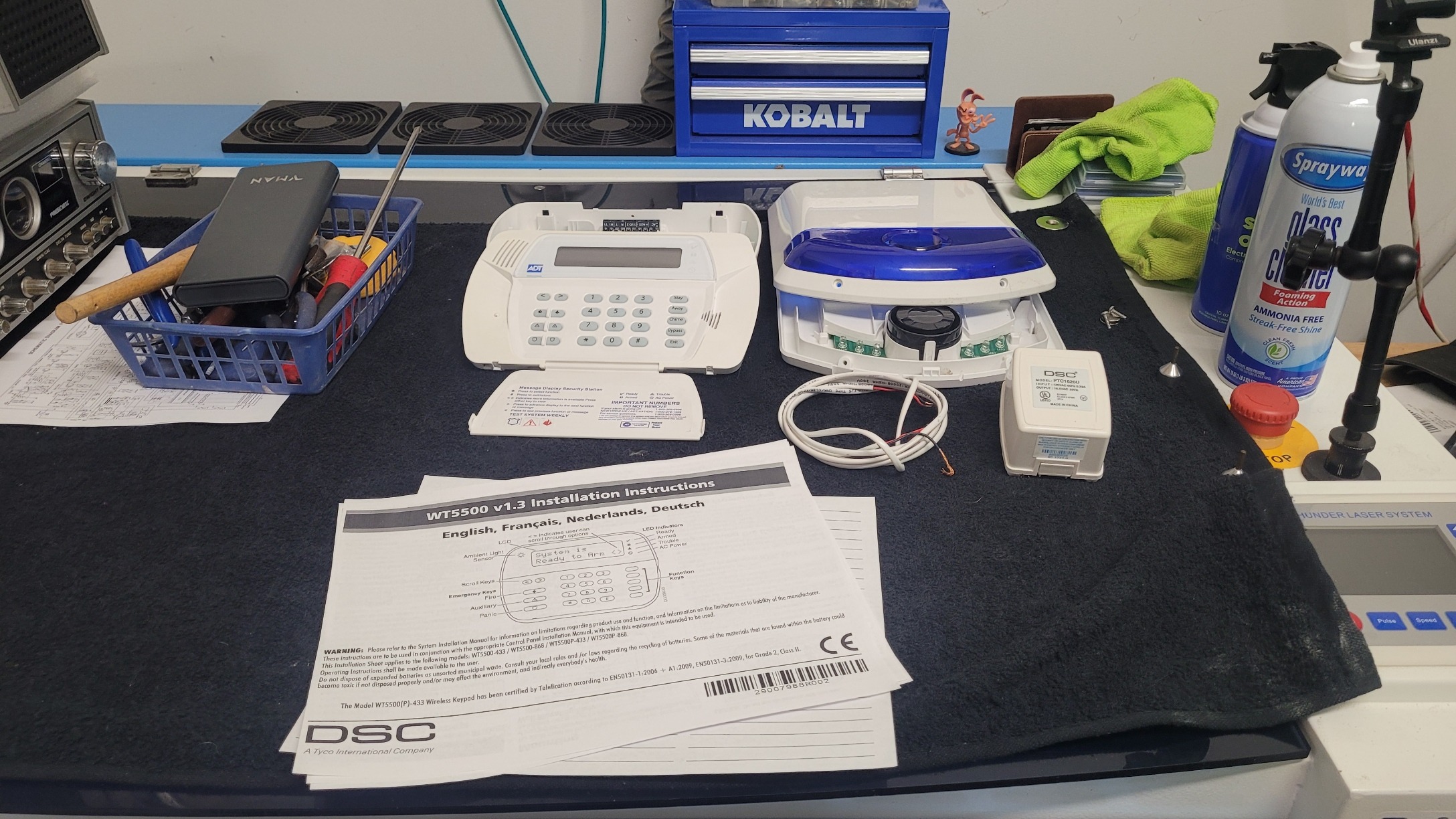
When my family and I moved into our current home, we found a legacy DSC Alarm already installed. Since the system was outdated, unmonitored, and completely disconnected from modern alert systems, I opted to remove it. However, the hardware itself—a testament to its vintage engineering—was robust and still functional. I decided that instead of tossing it, I would transform this robust, inherited system.
This multi-part series isn’t just about cleaning up an old alarm; it’s about transforming it into an off-grid, resilient, and intelligent security guardian using the Meshtastic mesh networking protocol! My ultimate goal is to create a fully self-reliant, peer-to-peer notification system that can alert me even when the internet is down, power is out, or cellular networks are jammed. I am taking this abandoned, time-tested wireless DSC system and giving it a powerful, modern, digital voice.
❓ Why Bother with Old Tech? The Case for Resurrection
Why dedicate time to hacking a specific vintage system like a DSC panel when countless plug-and-play smart alarms are available? For me, the answer lies in reliability and independence.
-
Durability & Reliability: Many older alarm systems, including mine, boast incredibly robust sensors and panel components that have been proven to last decades. This vintage hardware offers superior, time-tested performance, minimizing false alarms and battery hassle.
-
Off-Grid Resilience: This is the game-changer for me. My Meshtastic-integrated system will provide critical notification capability independent of traditional telecommunications infrastructure. My security should not fail simply because the Wi-Fi router or cell tower is offline.
-
Privacy & Control: By building my own local bridge, I maintain full control over my data and system logic, avoiding reliance on external cloud servers, subscription fees, or invasive data collection practices.
-
Cost-Effectiveness & Sustainability: Reusing this hardware that was otherwise destined for the trash is not only dramatically cheaper than buying a new complete system, but it also promotes electronic sustainability and reuse—a win-win!
🗺️ The Grand Plan: My Multi-Part Journey to Off-Grid Security
My mission is ambitious, but entirely achievable. I’ve broken down this project into logical, digestible steps, and I’ll be documenting the entire process:
Part 1: 🚀 The Plan & Introduction (You Are Here!)
I’ve introduced the project, explained the “why,” and established the essential legal and safety guidelines that must be adhered to.
Part 2: 🧪 Testing & Refurbishing the Alarm System Hardware
I’ll focus on confirming the integrity of my wireless sensors and panel. Critically, I’ll be identifying and programming the Programmable Output (PGM) pins on my panel, as this is the only way to get a clean, electrical signal out of a wireless system.
Part 3: 📡 Meshtastic Integration – Connecting the Alarm to the Mesh
This is where the magic happens! I’ll select my microcontroller (e.g., ESP32), confirm the voltage safety of the PGM connection, and write the code to translate the alarm event signals into digital messages for transmission over the LoRa-based Meshtastic network.
Part 4: 🔬 Test Bench Validation
This part is dedicated to rigorous, multi-phase testing on the workbench. I’ll validate functionality, confirm power resilience (testing the battery failover), and verify the reliability of the Meshtastic communication before any final deployment is considered.