
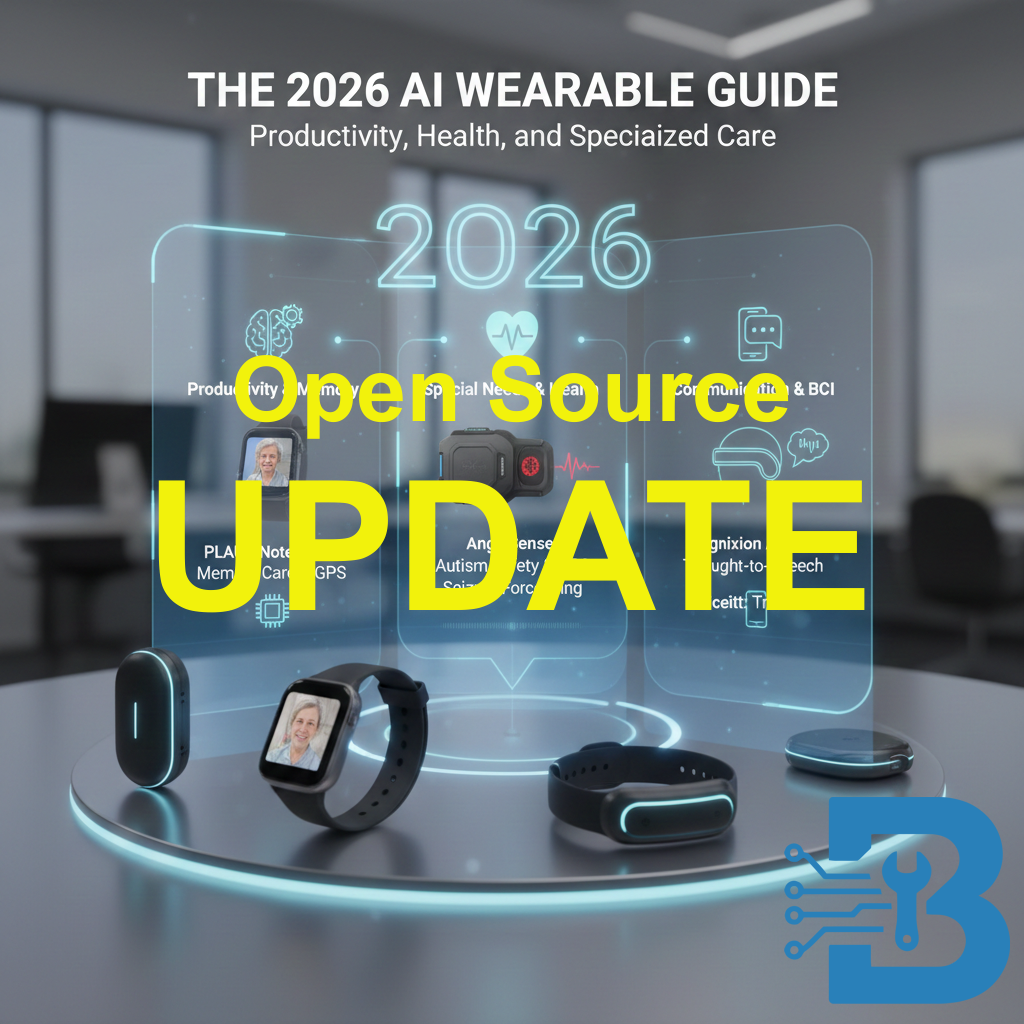
The 2026 AI Wearable Update: Open-Source AI Wearables
🛡️ The 2026 AI Wearable Update: Open-Source AI Wearables
🧱 The Problem: The “Bricking” of Limitless
When Limitless was acquired by Meta, it put a timer on every pendant sold. Once official servers go dark, proprietary hardware often becomes an expensive paperweight.
- The Risk: You lose your life-log data and the ability to transcribe or summarize.
- The Solution: Use the Official Developer API to rescue your data, or reverse engineer the hardware to bypass their cloud entirely.
🛠️ Phase 1: Using the Official “Escape Hatch”
The Limitless Developer API allows you to pull your data out of their ecosystem automatically. This is the best first step to avoid a “brick.”
🔑 Step 1: Generate an API Key
Go to your Limitless Desktop or Web App settings to find the “Developer” link. Generate a unique X-API-Key. This key is your “all-access pass” to your own data.
📥 Step 2: Automated Data Rescue
You can now use simple code commands (Python/curl) to download your history:
- Download Raw Audio: Use GET /v1/download-audio to get your recordings as Ogg Opus files. You can then feed these into a local Whisper instance for private transcription.
- Sync Lifelogs: Use GET /v1/lifelogs to pull your summarized memories and sync them to your own private database (like Notion or Obsidian).
🔬 Phase 2: Hardware Reverse Engineering
If the API ever shuts down, you can pivot to Direct Hardware Control as documented in the Omi (formerly BasedHardware) GitHub community.
🔍 Capture the BLE Traffic
The pendant communicates via Bluetooth Low Energy (BLE). To take control, you must decode its “language.”
- HCI Snoop Logs: Enable Bluetooth logs in Android Developer Options to record every packet sent between the official app and your pendant.
- Wireshark Analysis: Import those logs into Wireshark to find the GATT Service UUIDs—the digital “pipes” where your audio data flows.
🎧 Decoding & Re-Flashing
Most pendants use ESP32-S3 or nRF52 chips. Using an ESP-Prog, you can physically wipe the corporate firmware and install a 100% open-source alternative from the Omi project.
🏗️ The “Build-Your-Own” Shopping List
To avoid these headaches entirely, you can build a device that is open-source by design. These components are the community standard:
- Microcontroller: The Seeed Studio Xiao ESP32S3 Sense is the “brain.” It is thumb-sized and includes a built-in microphone and SD card slot.
- Audio Capture: For professional-grade business transcription, add an Adafruit I2S MEMS Microphone. It provides cleaner digital audio than standard analog mics.
- Power: A 3.7V 500mAh LiPo Battery fits inside most 3D-printed cases and provides roughly 10 hours of active recording.
| Seeed Studio Xiao ESP32S3 | Adafruit I2S MEMS Microphone Breakout | 3.7V 500mAh LiPo Polymer Rechargeable Battery |
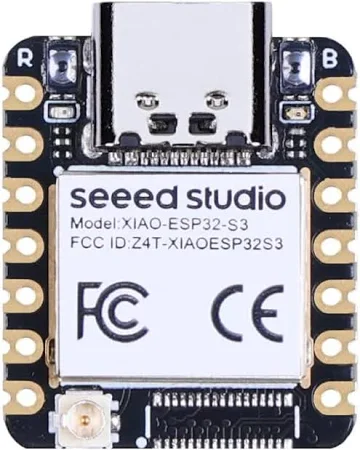 |
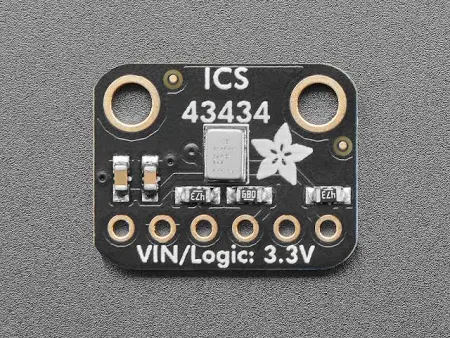 |
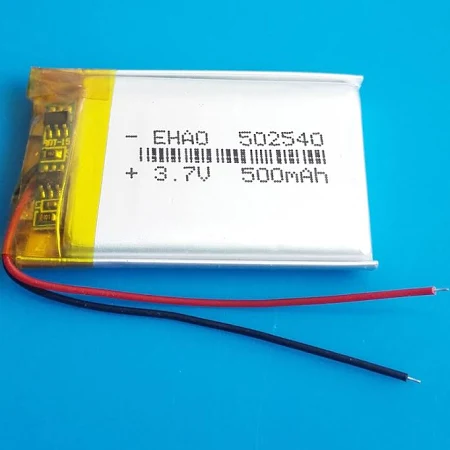 |
🧠 The “Unbreakable” Backend Stack
To ensure your device never stops working, point your hardware (or your API script) at this “Local-First” stack:
| Layer | Recommended Tool | Why it’s Unbreakable |
| Transcription | Faster-Whisper | High-speed, local speech-to-text. No subscription needed. |
| Intelligence | Ollama (Llama 3) | Runs a full AI model on your own PC or a private server. |
| MCP Sync | Model Context Protocol | The Limitless API now supports MCP, allowing you to plug your data directly into Claude or ChatGPT without using the Limitless app. |
🚀 Final Recommendation
The Limitless API is your bridge to freedom. By using it to pipe your audio to Ollama or Claude via MCP, you can keep the hardware but replace the “brain” with whatever service you prefer.